by Dylan Blaylock
on March 11, 2013
On Wednesday, March 20, the Government Accountability Project (GAP) will bring the American Whistleblower Tour: Essential Voices for Accountability to American University (AU). The Tour stop will feature whistleblower Phyllis McKelvey, who collected more than 180,000 petition signatures raising serious safety concerns about the USDA's proposed poultry inspection model.
GAP's Tour is a dynamic campaign aimed at educating the public – particularly university students – about the phenomenon and practice of whistleblowing. This event, like all stops, features a moderated discussion with a prominent whistleblower. This presentation runs from 9:15 a.m. – 10:15 a.m., with a continental breakfast and introductory remarks preceding the discussion.
A Continuing Legal Education (CLE) initiative follows the Tour stop, from 10:30 a.m. – 12:30 p.m. The CLE features a presentation by GAP staff on navigating the new food safety whistleblower provision contained in the Food Safety Modernization Act (FSMA).
The event is free and open to all, but registration is required. A full description/timeline of this stop can be found here, and a description of the Tour can be found at www.WhistleblowerTour.org. The program will take place at the AU Washington College of Law, Room 603. The Tour stop is sponsored by GAP’s Food Integrity Campaign, along with the American University Washington College of Law.
Read more »
by Sarah Damian
on March 08, 2013
Despite states serving as the battleground for various controversial bills that silence agriculture whistleblowers, Ag Gag legislation is not simply a state issue. Introduced in at least nine states and expected in several more, the bills not only threaten the integrity of food that is often transported across state lines, but they also threaten the public's right-to-know about how their food is processed. Recently, National Public Radio's "On the Media" discussed the potential impact of the legislation on undercover reporting (which resulted in Upton Sinclair's The Jungle) and investigative journalism. FIC has been fighting these bills since early 2011 due to their harm to whistleblowers, whose ability to safely expose wrongdoing is severely jeopardized under Ag Gag.
While the facilities targeted in these bills are animal-housing slaughterhouses, animal welfare advocates are not the only ones drastically impacted. Nearly 50 organizations have come out against Ag Gag, and most of them aren't animal welfare groups. Opponents include civil liberties, public health, food safety, food justice, environmental, legal, workers' rights, journalism and First Amendment organizations across the country. Keeping would-be whistleblowers from speaking up is clearly striking a nerve.
Read more »
by Alyssa Doom
on February 27, 2013
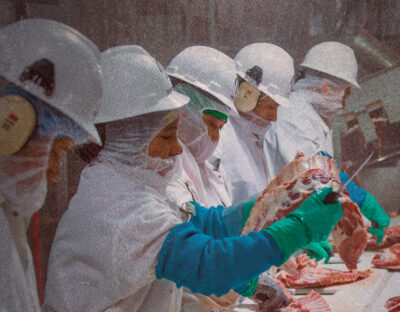
With less than two days left before Americans can expect across-the-board federal budget cuts, we are reminded of the impacts the dreaded “sequester” could have on food safety. But with plans to cut federal inspection in poultry processing already underway, these fears are long overdue.
In order to comply with spending cuts, the Office of Management and Budget has said that 1) the FDA could conduct up to 2,100 fewer food inspections, and 2) that the USDA may have to eliminate export inspections and enact two-week furloughs for FSIS employees, which would pull federal inspectors out of slaughterhouses. Cuts to both agencies would “leave our communities vulnerable,” warned President Obama in his weekly address. Indeed, consumer health will be threatened nationwide, as evidenced by a White House memo released last week in which officials warned about the impacts of the sequester on both a federal and state-by-state basis. According to the memo, with fewer FDA and FSIS inspections at domestic and foreign food facilities, the public is at a heightened risk for contracting foodborne illness.
Read more »
by Sarah Damian
on February 26, 2013
Image Courtesy of UNITE HEREShouldn't workers who serve food on college campuses be free to speak up on the job? Food integrity can't really exist if those charged with handling your food have no voice.
Fortunately, UNITE HERE – the largest worker organization in North America representing food service workers – has launched its Real Food Real Jobs campaign at universities in the nation's capital to ensure better working conditions and worker participation in bringing safe, healthy food options to students.
In addition to pushing for traditional benefits – including living wages, health care benefits, and full-time work hours – the campaign is also making worker voices a priority. Erin O'Donnell, a UNITE HERE research analyst working on the campaign, explained why worker input is an incredibly valuable asset to the food movement.
They are on the front-lines of the growing, preparing, cooking, serving, of the foodservice industry, and their voices not only matter in a basic human sense in that everyone should have the right to be able to speak up on their job and talk about what matters to them and have their voices be heard, but they're also really valuable because they know what it means to try to serve thousands of often pretty picky students every single day and try to feed them the best quality food possible.
To ensure the workers have a voice, UNITE HERE is working to establish a "joint worker/management committee" that involves workers and campus community members in food-related decision-making. It gives those on the front-lines a key voice where it counts. Again, from O'Donnell:
That committee is also going to conduct a survey of workers to get everyone's input on what kind of changes should be made in the dining halls. The committee is also going to serve as a place where workers can bring concerns about food safety and food quality if issues like that happen to arise, which is a great protection for workers.
The effort in DC has already found success at American University (AU), where a major landmark agreement was made in late January between AU workers and Bon Appétit Management Company that achieves all major upgrades the workers sought – including the assurances of whistleblower protections.
Read more »
by Alyssa Doom
on February 21, 2013
Today the nonprofit ocean protection group Oceana released the results of the largest seafood fraud survey to date. Findings indicated that consumers need to be concerned with more than just horse meat in hamburgers or meat glue in steaks and other products.
After two years of collecting more than 1,200 seafood samples from U.S. grocery stores and restaurants, researchers found that 33% of seafood products were mislabeled. Among the most common were snapper and tuna. With nearly one-third of samples mislabeled, these results clearly point to a lack of transparency and a need for improved mechanisms to trace, document, and inspect our food supply.
Mislabeled seafood poses a major health risk to vulnerable consumers. Seafood consumption is related to a variety of health problems such as allergies or digestion troubles. For mothers seeking to avoid fish containing higher levels of mercury – a substance known to harm the physical development of unborn babies and young children – these findings should be particularly poignant. Mislabeled seafood strips consumers of the right to make informed choices and avoid negative health consequences.
Read more »
by Sarah Damian
on February 19, 2013
Soda and other sugary drinks are the single biggest source of calories in the American diet, according to the Center for Science in the Public Interest (CSPI). Yikes! With ongoing concerns regarding the link between sugary drinks and chronic health problems, consumers might want to know how much is too much!
CSPI, along with various groups and public health departments around the country, have submitted a petition to the Food and Drug Administration (FDA) urging the agency to determine a safe level of added sugars for beverages. The most popular added "sugar" is the cheaper, more controversial sugar substitute high fructose corn syrup (HFCS) that, according to one whistleblower, affects the body differently than regular sugar. That's not a comforting thought given the 16 teaspoons of sugars from HFCS in a typical 20-ounce bottle of soda (twice the daily limit recommended by the American Heart Association!).
Read more »
by Food Integrity Campaign
on February 08, 2013
The monthly recap below appeared in FIC's February e-Newsletter (first Tuesday of the month). If you would like to receive monthly updates and other urgent alerts via email, please sign up here.
FIC Fights Anti-Whistleblower 'Ag Gag' Bills in 2013
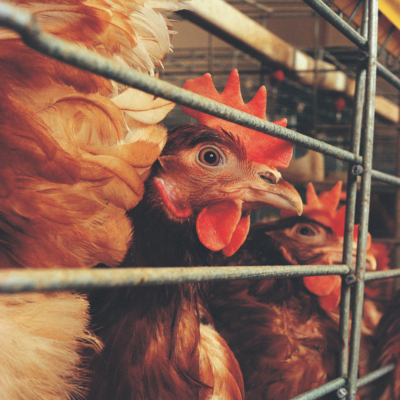
Controversial pieces of legislation that criminalize agriculture whistleblowers who document wrongdoing at farming facilities – rather than holding the perpetrators accountable – have returned to several states this year. These proposed bills, known as 'Ag Gag' legislation, have already been introduced in Wyoming, Nebraska, New Hampshire, Arkansas and Indiana. FIC has been working with coalition partners to counter these bills and the misleading messaging surrounding them. In general, these bills seek to criminalize the practice of recording video at agricultural operations without permission. As GAP can attest, in its 36 years of supporting whistleblowers, video and audio recording is often the only way to vindicate the claims of truth-tellers. Plant workers are often simply too disenfranchised to stop animal, environmental, and food safety abuses on their word alone. We demand to know why state legislatures are providing the meat industry with an accountability waiver while undermining the consumers’ right to know.
Read more »
|
|